

Sort by:

From 1915 to 1921, Hawaiian counties issued license plates yearly until 1922, in which a multitude of counties in the Territory of Hawaii unified to discuss the distribution of license plates. Throughout their history, Hawaiian license plates have gone through a variety of alterations and materials, ranging from wood to porcelain to steel-embossed with swordfish, automobile, and surfer-shaped expiration tags. Hawaiian license plates manufactured in 1976 were the first to display print on retro-reflective foil. The first graphic to be featured on Hawaiian license plates was the territory’s name, stamped on the license plate in a South Pacific font. After Hawaii became an official state in 1959, the slogan became “Aloha State.” The tv-show Hawaii Five-O popularized Hawaiian license plates beginning in 1968 and, continued the trend through 1988 with the tv-show Magnum P.I. displaying the Aloha State warrior license plate on a red Ferrari 308 GTS featuring the number ROBIN 1. Although vintage Hawaiian license plates have reached high demand in recent years, they are difficult to procure as steel license plates have been destroyed by the salt from the ocean.
PRINTED LICENSE PLATE REPLICA METAL SIGN
- Dimensions: 18" X 10" Weighs: 2lbs.
- Made with heavy gauge steel, close cut outline
- Baked and Powder Coated Sublimation Printing for a durable & long-lasting finish

From 1915 to 1921, Hawaiian counties issued license plates yearly until 1922, in which a multitude of counties in the Territory of Hawaii unified to discuss the distribution of license plates. Throughout their history, Hawaiian license plates have gone through a variety of alterations and materials, ranging from wood to porcelain to steel-embossed with swordfish, automobile, and surfer-shaped expiration tags. Hawaiian license plates manufactured in 1976 were the first to display print on retro-reflective foil. The first graphic to be featured on Hawaiian license plates was the territory’s name, stamped on the license plate in a South Pacific font. After Hawaii became an official state in 1959, the slogan became “Aloha State.” The tv-show Hawaii Five-O popularized Hawaiian license plates beginning in 1968 and, continued the trend through 1988 with the tv-show Magnum P.I. displaying the Aloha State warrior license plate on a red Ferrari 308 GTS featuring the number ROBIN 1. Although vintage Hawaiian license plates have reached high demand in recent years, they are difficult to procure as steel license plates have been destroyed by the salt from the ocean.
PRINTED LICENSE PLATE REPLICA METAL SIGN
- Dimensions: 21" X 10" Weighs: 2lbs.
- Made with heavy gauge steel, close cut outline
- Baked and Powder Coated Sublimation Printing for a durable & long-lasting finish

From 1915 to 1921, Hawaiian counties issued license plates yearly until 1922, in which a multitude of counties in the Territory of Hawaii unified to discuss the distribution of license plates. Throughout their history, Hawaiian license plates have gone through a variety of alterations and materials, ranging from wood to porcelain to steel-embossed with swordfish, automobile, and surfer-shaped expiration tags. Hawaiian license plates manufactured in 1976 were the first to display print on retro-reflective foil. The first graphic to be featured on Hawaiian license plates was the territory’s name, stamped on the license plate in a South Pacific font. After Hawaii became an official state in 1959, the slogan became “Aloha State.” The tv-show Hawaii Five-O popularized Hawaiian license plates beginning in 1968 and, continued the trend through 1988 with the tv-show Magnum P.I. displaying the Aloha State warrior license plate on a red Ferrari 308 GTS featuring the number ROBIN 1. Although vintage Hawaiian license plates have reached high demand in recent years, they are difficult to procure as steel license plates have been destroyed by the salt from the ocean.
PRINTED LICENSE PLATE REPLICA METAL SIGN
- Dimensions: 19" X 18" Weighs: 2lbs.
- Made with heavy gauge steel, close cut outline
- Baked and Powder Coated Sublimation Printing for a durable & long-lasting finish
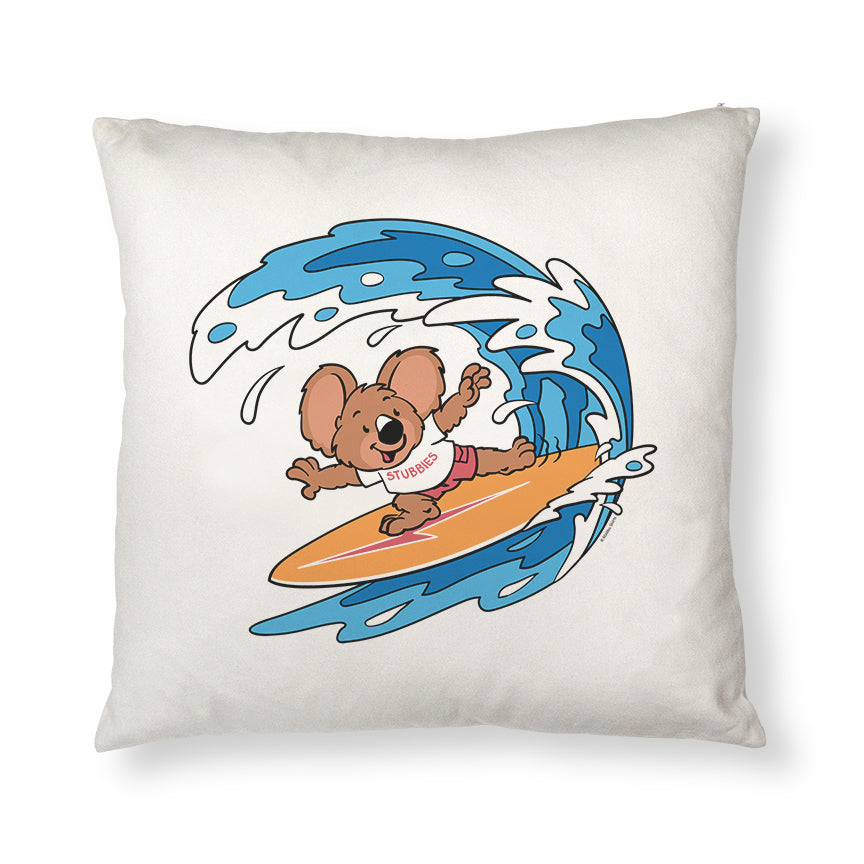
Printed in the U.S.A. with water based ink, our 100% all-natural cotton pillowcases are a luxurious texture for optimal comfort and durability that will keep you dreaming of the Aloha spirit in your own home. With vintage Hawaiian designs from now and then, our crisp, smooth pillowcases are an exceptional memento and gift as they are both functional and sentimental. The durable yet supple softness of the pillowcase will assure your comfort while offering a unique Hawaiian display pleasing to the eye. A hidden on-edge zipper with reinforced stitching allows your pillowcase to cover any insert without the undesirable zipper display. When it comes time to clean, simply toss in the washer and tumble dry on low for a fresh start!
ALL-NATURAL 100% COTTON PILLOW CASE
- Size is 16" X 16" Pillows cases are hand crafted therefore there might be some slight variations
- Invisable zipper closure to easily slip pillow cover over any insert
- Machine washable, Cold water, Tumble dry low
- Filling not included
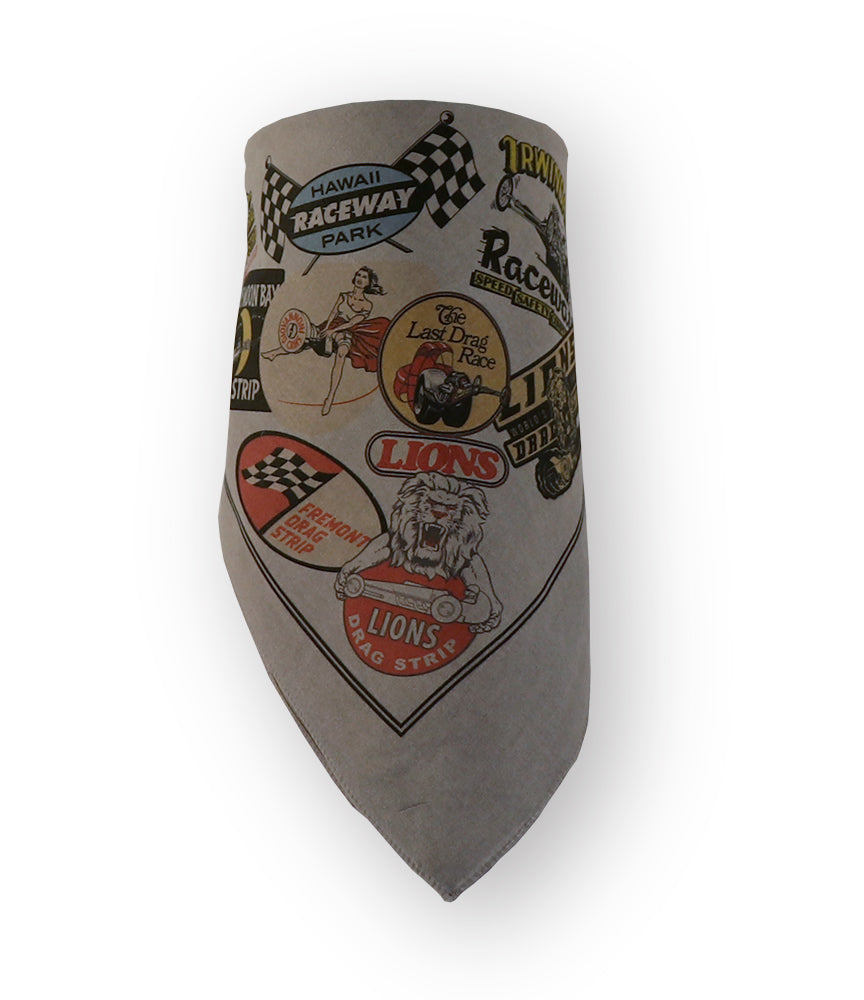


ALL-NATURAL 100% COTTON UNISEX BANDANA
- Size is 20" X 20"
- Flat hemmed
- Wear as a face mask, scarf, headband, necktie or wrist/head wrap
- Soft, durable and washable


ALL-NATURAL 100% COTTON UNISEX BANDANA
- Size is 20" X 20"
- Flat hemmed
- Wear as a face mask, scarf, headband, necktie or wrist/head wrap
- Soft, durable and washable


ALL-NATURAL 100% COTTON UNISEX BANDANA
- Size is 20" X 20"
- Flat hemmed
- Wear as a face mask, scarf, headband, necktie or wrist/head wrap
- Soft, durable and washable


ALL-NATURAL 100% COTTON UNISEX BANDANA
- Size is 20" X 20"
- Flat hemmed
- Wear as a face mask, scarf, headband, necktie or wrist/head wrap
- Soft, durable and washable
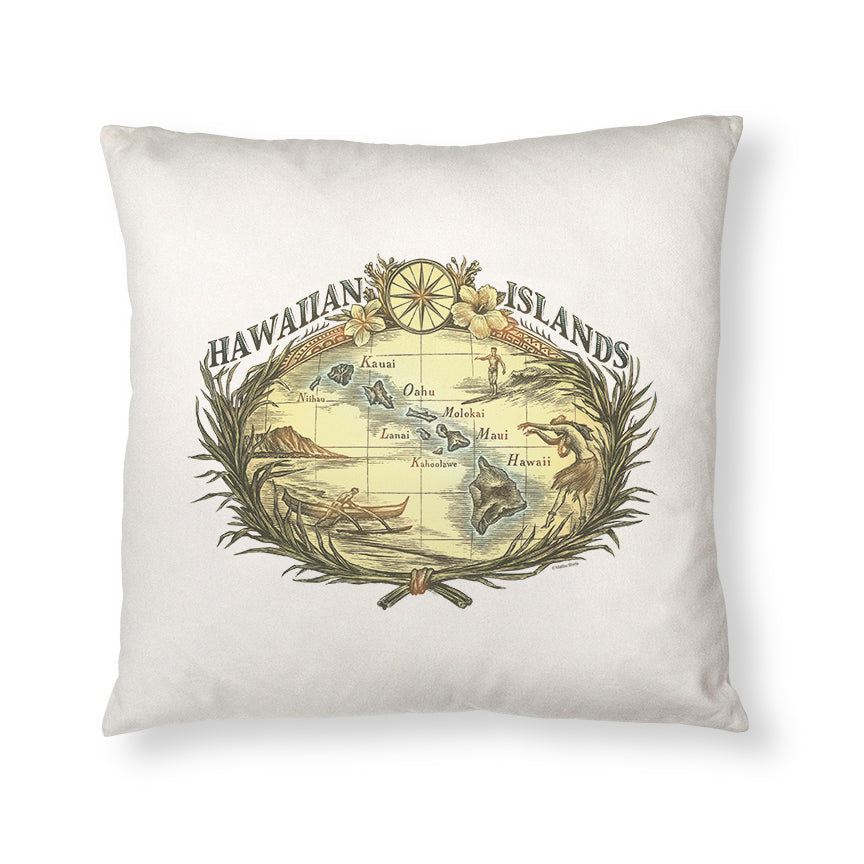
Printed in the U.S.A. with water based ink, our 100% all-natural cotton pillowcases are a luxurious texture for optimal comfort and durability that will keep you dreaming of the Aloha spirit in your own home. With vintage Hawaiian designs from now and then, our crisp, smooth pillowcases are an exceptional memento and gift as they are both functional and sentimental. The durable yet supple softness of the pillowcase will assure your comfort while offering a unique Hawaiian display pleasing to the eye. A hidden on-edge zipper with reinforced stitching allows your pillowcase to cover any insert without the undesirable zipper display. When it comes time to clean, simply toss in the washer and tumble dry on low for a fresh start!
ALL-NATURAL 100% COTTON PILLOW CASE
- Size is 16" X 16" Pillows cases are hand crafted therefore there might be some slight variations
- Invisable zipper closure to easily slip pillow cover over any insert
- Machine washable, Cold water, Tumble dry low
- Filling not included
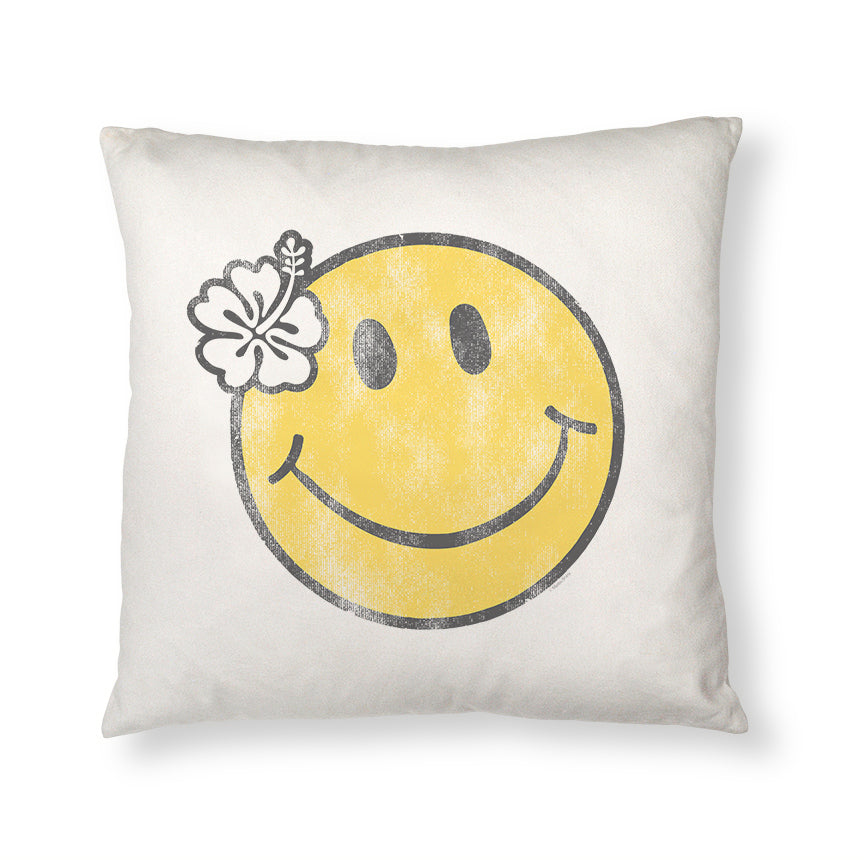
Printed in the U.S.A. with water based ink, our 100% all-natural cotton pillowcases are a luxurious texture for optimal comfort and durability that will keep you dreaming of the Aloha spirit in your own home. With vintage Hawaiian designs from now and then, our crisp, smooth pillowcases are an exceptional memento and gift as they are both functional and sentimental. The durable yet supple softness of the pillowcase will assure your comfort while offering a unique Hawaiian display pleasing to the eye. A hidden on-edge zipper with reinforced stitching allows your pillowcase to cover any insert without the undesirable zipper display. When it comes time to clean, simply toss in the washer and tumble dry on low for a fresh start!
ALL-NATURAL 100% COTTON PILLOW CASE
- Size is 16" X 16" Pillows cases are hand crafted therefore there might be some slight variations
- Invisable zipper closure to easily slip pillow cover over any insert
- Machine washable, Cold water, Tumble dry low
- Filling not included
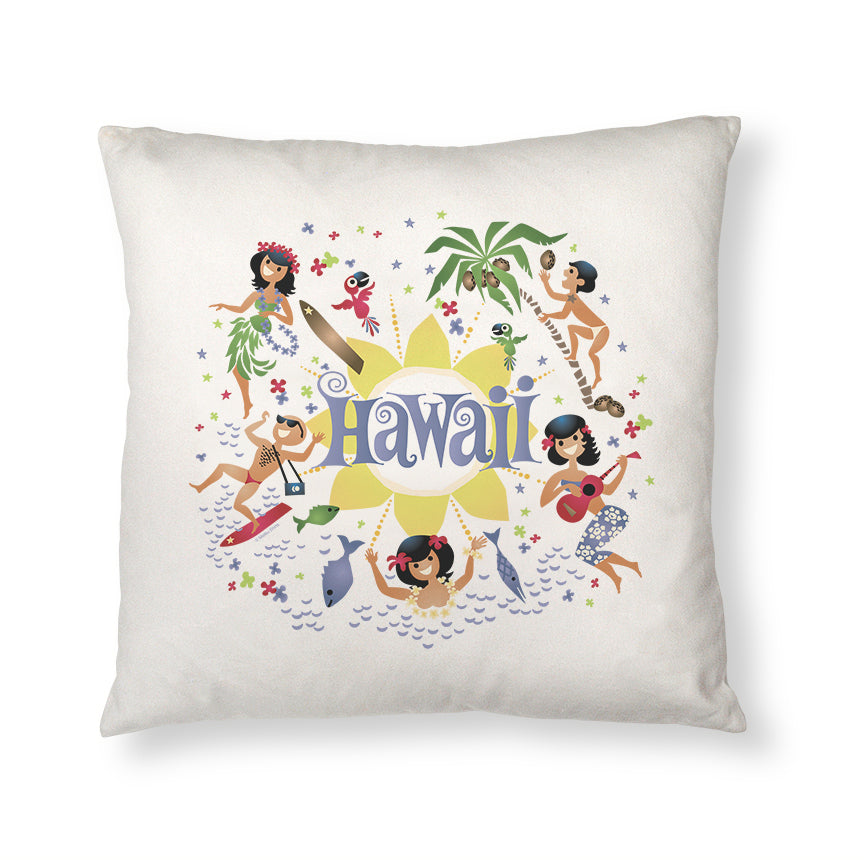
Printed in the U.S.A. with water based ink, our 100% all-natural cotton pillowcases are a luxurious texture for optimal comfort and durability that will keep you dreaming of the Aloha spirit in your own home. With vintage Hawaiian designs from now and then, our crisp, smooth pillowcases are an exceptional memento and gift as they are both functional and sentimental. The durable yet supple softness of the pillowcase will assure your comfort while offering a unique Hawaiian display pleasing to the eye. A hidden on-edge zipper with reinforced stitching allows your pillowcase to cover any insert without the undesirable zipper display. When it comes time to clean, simply toss in the washer and tumble dry on low for a fresh start!
ALL-NATURAL 100% COTTON PILLOW CASE
- Size is 16" X 16" Pillows cases are hand crafted therefore there might be some slight variations
- Invisable zipper closure to easily slip pillow cover over any insert
- Machine washable, Cold water, Tumble dry low
- Filling not included

Street racing burned rubber through Los Angeles, California during the 1950s drawing fans of all ages with raucous noise and adrenaline thrills to this all-American sport. Opening its gates in October 1955, Lions Drag Strip welcomed 15,000 people to witness cars race in the Wilmington district of sunny L.A. The Lions Club International sponsored the beloved track, hosting a variety of races licensed by the American Hot Rod Association. After consistently holding races every Sunday for the next two years, Mickey Thompson, the strip manager, proposed Saturday night racing, leading to a rapid escalation of young fans in attendance. The drag strip thrived until 1972 when it was torn down to allow space for shipping cargo containers overseas. The memory of Lions Drag Strip cruises on today being honored through pop culture with comedians paying tribute to announcer Larry Huffman’s wired announcing style, in television series like The Munsters and MadMen , and Brad Pitt’s character in Once Upon a Time in Hollywood wearing a Lions Drag Strip t-shirt.
VINTAGE METAL SIGN
- Dimensions: 12" X 18"
- Grommet holes for easy hanging
- Made with heavy gauge steel
- Baked and Powder Coated Sublimation Printing for a durable & long-lasting finish

Street racing burned rubber through Los Angeles, California during the 1950s drawing fans of all ages with raucous noise and adrenaline thrills to this all-American sport. Opening its gates in October 1955, Lions Drag Strip welcomed 15,000 people to witness cars race in the Wilmington district of sunny L.A. The Lions Club International sponsored the beloved track, hosting a variety of races licensed by the American Hot Rod Association. After consistently holding races every Sunday for the next two years, Mickey Thompson, the strip manager, proposed Saturday night racing, leading to a rapid escalation of young fans in attendance. The drag strip thrived until 1972 when it was torn down to allow space for shipping cargo containers overseas. The memory of Lions Drag Strip cruises on today being honored through pop culture with comedians paying tribute to announcer Larry Huffman’s wired announcing style, in television series like The Munsters and MadMen , and Brad Pitt’s character in Once Upon a Time in Hollywood wearing a Lions Drag Strip t-shirt.
VINTAGE METAL SIGN
- Dimensions: 12" X 18"
- Grommet holes for easy hanging
- Made with heavy gauge steel
- Baked and Powder Coated Sublimation Printing for a durable & long-lasting finish

Street racing burned rubber through Los Angeles, California during the 1950s drawing fans of all ages with raucous noise and adrenaline thrills to this all-American sport. Opening its gates in October 1955, Lions Drag Strip welcomed 15,000 people to witness cars race in the Wilmington district of sunny L.A. The Lions Club International sponsored the beloved track, hosting a variety of races licensed by the American Hot Rod Association. After consistently holding races every Sunday for the next two years, Mickey Thompson, the strip manager, proposed Saturday night racing, leading to a rapid escalation of young fans in attendance. The drag strip thrived until 1972 when it was torn down to allow space for shipping cargo containers overseas. The memory of Lions Drag Strip cruises on today being honored through pop culture with comedians paying tribute to announcer Larry Huffman’s wired announcing style, in television series like The Munsters and MadMen , and Brad Pitt’s character in Once Upon a Time in Hollywood wearing a Lions Drag Strip t-shirt.
VINTAGE METAL SIGN
- Dimensions: 12" X 18"
- Grommet holes for easy hanging
- Made with heavy gauge steel
- Baked and Powder Coated Sublimation Printing for a durable & long-lasting finish

Street racing burned rubber through Los Angeles, California during the 1950s drawing fans of all ages with raucous noise and adrenaline thrills to this all-American sport. Opening its gates in October 1955, Lions Drag Strip welcomed 15,000 people to witness cars race in the Wilmington district of sunny L.A. The Lions Club International sponsored the beloved track, hosting a variety of races licensed by the American Hot Rod Association. After consistently holding races every Sunday for the next two years, Mickey Thompson, the strip manager, proposed Saturday night racing, leading to a rapid escalation of young fans in attendance. The drag strip thrived until 1972 when it was torn down to allow space for shipping cargo containers overseas. The memory of Lions Drag Strip cruises on today being honored through pop culture with comedians paying tribute to announcer Larry Huffman’s wired announcing style, in television series like The Munsters and MadMen , and Brad Pitt’s character in Once Upon a Time in Hollywood wearing a Lions Drag Strip t-shirt.
VINTAGE METAL SIGN
- Dimensions: 12" X 18"
- Grommet holes for easy hanging
- Made with heavy gauge steel
- Baked and Powder Coated Sublimation Printing for a durable & long-lasting finish

Street racing burned rubber through Los Angeles, California during the 1950s drawing fans of all ages with raucous noise and adrenaline thrills to this all-American sport. Opening its gates in October 1955, Lions Drag Strip welcomed 15,000 people to witness cars race in the Wilmington district of sunny L.A. The Lions Club International sponsored the beloved track, hosting a variety of races licensed by the American Hot Rod Association. After consistently holding races every Sunday for the next two years, Mickey Thompson, the strip manager, proposed Saturday night racing, leading to a rapid escalation of young fans in attendance. The drag strip thrived until 1972 when it was torn down to allow space for shipping cargo containers overseas. The memory of Lions Drag Strip cruises on today being honored through pop culture with comedians paying tribute to announcer Larry Huffman’s wired announcing style, in television series like The Munsters and MadMen , and Brad Pitt’s character in Once Upon a Time in Hollywood wearing a Lions Drag Strip t-shirt.
VINTAGE METAL SIGN
- Dimensions: 13" X 17"
- Grommet holes for easy hanging
- Made with heavy gauge steel
- Baked and Powder Coated Sublimation Printing for a durable & long-lasting finish


The Strong Current Surf Shop has been a staple on the North Shore since 1989. The shop was founded by the husband-and-wife team of Johnny and Bonnie Moore, who left New Jersey for a slice of Hawaiian heaven. Originally the shop sold surfboards, surfboard accessories and apparel, but it quickly became evident that their apparel, which they were screen printing upstairs from their shop, was the big draw. In 1993 the shop also became the home for the Hale'iwa Surf Museum. A surf museum in an apparel store, what a crazy idea, right?
5.5 OZ. 100% RINGSPUN COTTON GARMENT-DYED UNISEX T-SHIRT
- Preshrunk, soft-washed, garment-dyed fabric
- Twill taped shoulder-to-shoulder
- Set-in sleeves
- Double-needle stitched sleeves and bottom hem
- 1" ribbed collar with double-needle topstitched neckline


While snow may be the last thing you think of when you think about Hawaii, it does exist. Hawaii actually gets snow on it's three highest Volcano peaks - Mauna Loa, Mauna Kea and Haleakala. Mauna Kea is the highest point in Hawaii, standing 13,796 feet above sea level and it's name actually means "white mountain" in reference to its peak which is frequently covered in snow during the winter months. Occasionally there is enough snow on the ground for snow skiing. There are no chair lifts or ski lodges, so people will drive to the summit, drop off their skiers, and meet them at the bottom of the run. The first recorded skiers on Mauna Kea were Dudley Lewis and his son in 1936 and skiing Maua Kea has grown in popularity over the years, especially after the summit road was completed in 1964. There are very loose records of impromptu skiing contests being held there as early as 1948 with the popularity and participation of the contests beginning to grow in the 1960's.
5.5 OZ. 100% RINGSPUN COTTON GARMENT-DYED UNISEX T-SHIRT
- Preshrunk, soft-washed, garment-dyed fabric
- Twill taped shoulder-to-shoulder
- Set-in sleeves
- Double-needle stitched sleeves and bottom hem
- 1" ribbed collar with double-needle topstitched neckline


5.5 OZ. 100% RINGSPUN COTTON GARMENT-DYED UNISEX T-SHIRT
- Preshrunk, soft-washed, garment-dyed fabric
- Twill taped shoulder-to-shoulder
- Set-in sleeves
- Double-needle stitched sleeves and bottom hem
- 1" ribbed collar with double-needle topstitched neckline


While snow may be the last thing you think of when you think about Hawaii, it does exist. Hawaii actually gets snow on it's three highest Volcano peaks - Mauna Loa, Mauna Kea and Haleakala. Mauna Kea is the highest point in Hawaii, standing 13,796 feet above sea level and it's name actually means "white mountain" in reference to its peak which is frequently covered in snow during the winter months. Occasionally there is enough snow on the ground for snow skiing. There are no chair lifts or ski lodges, so people will drive to the summit, drop off their skiers, and meet them at the bottom of the run. The first recorded skiers on Mauna Kea were Dudley Lewis and his son in 1936 and skiing Maua Kea has grown in popularity over the years, especially after the summit road was completed in 1964. There are very loose records of impromptu skiing contests being held there as early as 1948 with the popularity and participation of the contests beginning to grow in the 1960's.
5.5 OZ. 100% RINGSPUN COTTON GARMENT-DYED UNISEX T-SHIRT
- Preshrunk, soft-washed, garment-dyed fabric
- Twill taped shoulder-to-shoulder
- Set-in sleeves
- Double-needle stitched sleeves and bottom hem
- 1" ribbed collar with double-needle topstitched neckline


Surfer magazine called Makaha one of the “25 Best Waves in the World.” Hawaiian for “fierce,” Makaha is regarded in many circles as the home of big wave surfing, due in large part to the 30 foot wave that Greg “Da Bull” Noll caught in 1969. Until the advent of tow-in surfing, it was the largest wave ever ridden.
From 1954 to 1971, Makaha was home to the biggest surf competition of the day, the Makaha International Surfing Championships. Honolulu surfer and restaurant supplier John Lind created the winter contest, sponsored by the Waianae Lions Club and Waikiki Surf Club, to attract the world’s best surfers.
5.5 OZ. 100% RINGSPUN COTTON GARMENT-DYED UNISEX T-SHIRT
- Preshrunk, soft-washed, garment-dyed fabric
- Twill taped shoulder-to-shoulder
- Set-in sleeves
- Double-needle stitched sleeves and bottom hem
- 1" ribbed collar with double-needle topstitched neckline


Originally established in 1968 and founded by shaper Dave Garner, Plastic Fantastic Surfboards began a history that would span five decades, over half a dozen owners, and factories in 3 states. The name Plastic Fantastic was inspired by the Jefferson Airplane song “Plastic Fantastic Lover.” The original home for Plastic Fantastic was in Haleiwa, Hawaii from 1968 to 1970, followed by two more years of production at a different location on the North Shore. At the same time, Garner and Danny Calohan would open shop in Huntington Beach, California, and the company would employ a stable of gifted shapers through the years, including Skip Frye, Jock Sutherland, Robert August, Bruce Jones, and Barry Kanaiaupuni. From 1968 to 2003 it is estimated that Plastic Fantastic produced approximately 55,000 surfboards.
4.7 OZ. 60% COTTON 40% POLYESTER UNISEX T-SHIRT
- Preshrunk, soft-washed fabric
- Twill taped shoulder-to-shoulder
- Set-in sleeves
- Double-needle stitched sleeves and bottom hem
- 1" ribbed collar with double-needle topstitched neckline


Originally established in 1968 and founded by shaper Dave Garner, Plastic Fantastic Surfboards began a history that would span five decades, over half a dozen owners, and factories in 3 states. The name Plastic Fantastic was inspired by the Jefferson Airplane song “Plastic Fantastic Lover.” The original home for Plastic Fantastic was in Haleiwa, Hawaii from 1968 to 1970, followed by two more years of production at a different location on the North Shore. At the same time, Garner and Danny Calohan would open shop in Huntington Beach, California, and the company would employ a stable of gifted shapers through the years, including Skip Frye, Jock Sutherland, Robert August, Bruce Jones, and Barry Kanaiaupuni. From 1968 to 2003 it is estimated that Plastic Fantastic produced approximately 55,000 surfboards.
5.5 OZ. 100% RINGSPUN COTTON GARMENT-DYED UNISEX T-SHIRT
- Preshrunk, soft-washed, garment-dyed fabric
- Twill taped shoulder-to-shoulder
- Set-in sleeves
- Double-needle stitched sleeves and bottom hem
- 1" ribbed collar with double-needle topstitched neckline


Opening its gates in 1959, the quarter-mile Fremont Dragstrip near San Francisco Bay was renowned for dragster automobile racing. After Southern Pacific Railroad attained this land post-World War II, the track was established adjacent to a popular gliderport known as Skyways Airport, thus contributing to the growing popularity of the Fremont Dragstrip as its occupants were drawn to the exhilarating high speed races and the deafening noise of not only the cars but the fans cheering. At the end of the 1960s and into the early 1970s, business was booming at the races as a multitude of radio ads sparked interest among pop radio station listeners in San Francisco Bay, beckoning them to the thrill of the competitions. Races fueled the economy in the surrounding area as thousands of fans were eager to witness world-record performances by Don “The Snake” Prudhomme, “Big Daddy” Don Garlits, Connie Kalitta, and more. Many champions heralded the low humidity air from the San Francisco Bay that allowed them to acquire astounding speeds. Although the venue was renamed Baylands Raceway Park a few years prior to closing in 1988, it will always be revered as the infamous Fremont Dragstrip, drawing fans from all over the San Francisco Bay area.
6.1 OZ. 100% RINGSPUN COTTON T-SHIRT
- Preshrunk, soft-washed
- Twill taped shoulder-to-shoulder
- Set-in sleeves
- Double-needle stitched sleeves and bottom hem
- 1" ribbed collar with double-needle topstitched neckline


In 1957 Half Moon Bay Airport became one of racing’s fastest, most attractive quarter-mile drag strips. Located just outside of San Francisco, Half Moon Bay Dragstrip, became the largest drag strip in Northern California offering bleachers, concession stands, a safety net, and a timing tower constructed from a bread van, to its many fans. Big name racers, including “Big Daddy” Don Garlits and Don “the Snake” Prudhomme, attracted enthusiasts from across the United States to witness the historical race in which Garlits pulled off an unexpected win though Prudhomme’s name had been etched into the trophy even before the race took place. Although racing stopped in 1969, the nostalgic memories of Sunday morning’s roaring engines, wild cheering, and buzz of adrenaline-fueled excitement live on in the tales of drag racing.
5.5 OZ. 100% RINGSPUN COTTON T-SHIRT
- Preshrunk, soft-washed
- Twill taped shoulder-to-shoulder
- Set-in sleeves
- Double-needle stitched sleeves and bottom hem
- 1" ribbed collar with double-needle topstitched neckline


In 1999 the Irwindale Speedway emerged, quickly followed by the opening of the ⅛-mile drag racing strip in 2001. Located in Southern California’s San Gabriel Valley, the Irwindale Dragstrip hosts legal drag races for cars, trucks, and motorcycles. A firm believer in abiding by street-legal automobiles, the drag strip proudly rejects the “nowhere else to go” notion practiced by illegal street racers. From 2003 to 2010, the NASCAR Toyota All-Star Showdown competed on Irwindale Speedway’s ½-mile oval. This televised race included the top 30 drivers in the NASCAR K&N Pro series and the top 40 drivers in the NASCAR Whelen All-American series, attracting many car racing enthusiasts to what was known as the “best-of-the-best” race. Irwindale Speedway continues to be home to a diverse variety of car races from the Turkey Night Grand Prix to the NASCAR Toyota All-Star Showdown to the Formula D Championship Series.
6.1 OZ. 100% RINGSPUN COTTON T-SHIRT
- Preshrunk, soft-washed
- Twill taped shoulder-to-shoulder
- Set-in sleeves
- Double-needle stitched sleeves and bottom hem
- 1" ribbed collar with double-needle topstitched neckline


Street racing burned rubber through Los Angeles, California during the 1950s drawing fans of all ages with raucous noise and adrenaline thrills to this all-American sport. Opening its gates in October 1955, Lions Drag Strip welcomed 15,000 people to witness cars race in the Wilmington district of sunny L.A. The Lions Club International sponsored the beloved track, hosting a variety of races licensed by the American Hot Rod Association. After consistently holding races every Sunday for the next two years, Mickey Thompson, the strip manager, proposed Saturday night racing, leading to a rapid escalation of young fans in attendance. The drag strip thrived until 1972 when it was torn down to allow space for shipping cargo containers overseas. The memory of Lions Drag Strip cruises on today being honored through pop culture with comedians paying tribute to announcer Larry Huffman’s wired announcing style, in television series like The Munsters and MadMen , and Brad Pitt’s character in Once Upon a Time in Hollywood wearing a Lions Drag Strip t-shirt.
5.5 OZ. 100% RINGSPUN COTTON T-SHIRT
- Preshrunk, soft-washed
- Twill taped shoulder-to-shoulder
- Set-in sleeves
- Double-needle stitched sleeves and bottom hem
- 1" ribbed collar with double-needle topstitched neckline


Street racing burned rubber through Los Angeles, California during the 1950s drawing fans of all ages with raucous noise and adrenaline thrills to this all-American sport. Opening its gates in October 1955, Lions Drag Strip welcomed 15,000 people to witness cars race in the Wilmington district of sunny L.A. The Lions Club International sponsored the beloved track, hosting a variety of races licensed by the American Hot Rod Association. After consistently holding races every Sunday for the next two years, Mickey Thompson, the strip manager, proposed Saturday night racing, leading to a rapid escalation of young fans in attendance. The drag strip thrived until 1972 when it was torn down to allow space for shipping cargo containers overseas. The memory of Lions Drag Strip cruises on today being honored through pop culture with comedians paying tribute to announcer Larry Huffman’s wired announcing style, in television series like The Munsters and MadMen , and Brad Pitt’s character in Once Upon a Time in Hollywood wearing a Lions Drag Strip t-shirt.
6.1 OZ. 100% RINGSPUN COTTON T-SHIRT
- Preshrunk, soft-washed
- Twill taped shoulder-to-shoulder
- Set-in sleeves
- Double-needle stitched sleeves and bottom hem
- 1" ribbed collar with double-needle topstitched neckline


Surfer magazine called Makaha one of the “25 Best Waves in the World.” Hawaiian for “fierce,” Makaha is regarded in many circles as the home of big wave surfing, due in large part to the 30 foot wave that Greg “Da Bull” Noll caught in 1969. Until the advent of tow-in surfing, it was the largest wave ever ridden.
From 1954 to 1971, Makaha was home to the biggest surf competition of the day, the Makaha International Surfing Championships. Honolulu surfer and restaurant supplier John Lind created the winter contest, sponsored by the Waianae Lions Club and Waikiki Surf Club, to attract the world’s best surfers.
5.5 OZ. 100% RINGSPUN COTTON GARMENT-DYED YOUTH T-SHIRT
- Preshrunk, soft-washed, garment-dyed fabric
- Twill taped shoulder-to-shoulder
- Set-in sleeves
- Double-needle stitched sleeves and bottom hem
- 1" ribbed collar with double-needle topstitched neckline


Edward Fletcher and Co. began manufacturing men’s and boy's wear in Australia in 1939 and continued to be a common apparel brand for many decades. In 1972, the company saw an opportunity in the market to introduce a low cost, but well styled short which they called Stubbies. That same year, Stubbies went on to sell over 750,000 pairs, and by 1978 these shorts were so successful that the company officially changed its name to Stubbies Clothing Co. In the late 1970’s and into the 1980’s Stubbies sponsored a series of trial events in California, Hawaii and Florida to help contestants to qualify for the Stubbies Surf Classic. If you’re wondering about the name, legend says they were trying to come up with a name for the shorts and a tired salesmen got up and said, “This is thirsty work, I’m going out for a stubbie [of beer].” The name stuck.
5.5 OZ. 100% RINGSPUN COTTON UNISEX T-SHIRT
- Preshrunk, soft-washed fabric
- Twill taped shoulder-to-shoulder
- Set-in sleeves
- Double-needle stitched sleeves and bottom hem
- 1" ribbed collar with double-needle topstitched neckline


The Malibu Surf Club was founded in 1952 by a small but dedicated group of surfers that included such well-known members as Matt Kivlin, Les Williams, Joe and Aggie Quigg, Nina "Honeybear" Warren, and rat pack original - Peter Lawford.
5.5 OZ. 100% RINGSPUN COTTON GARMENT-DYED UNISEX T-SHIRT
- Preshrunk, soft-washed, garment-dyed fabric
- Twill taped shoulder-to-shoulder
- Set-in sleeves
- Double-needle stitched sleeves and bottom hem
- 1" ribbed collar with double-needle topstitched neckline


Edward Fletcher and Co. began manufacturing men’s and boy's wear in Australia in 1939 and continued to be a common apparel brand for many decades. In 1972, the company saw an opportunity in the market to introduce a low cost, but well styled short which they called Stubbies. That same year, Stubbies went on to sell over 750,000 pairs, and by 1978 these shorts were so successful that the company officially changed its name to Stubbies Clothing Co. In the late 1970’s and into the 1980’s Stubbies sponsored a series of trial events in California, Hawaii and Florida to help contestants to qualify for the Stubbies Surf Classic. If you’re wondering about the name, legend says they were trying to come up with a name for the shorts and a tired salesmen got up and said, “This is thirsty work, I’m going out for a stubbie [of beer].” The name stuck.
5.5 OZ. 100% RINGSPUN COTTON GARMENT-DYED UNISEX T-SHIRT
- Preshrunk, soft-washed, garment-dyed fabric
- Twill taped shoulder-to-shoulder
- Set-in sleeves
- Double-needle stitched sleeves and bottom hem
- 1" ribbed collar with double-needle topstitched neckline
Brands From Now And Then


- Choosing a selection results in a full page refresh.
- Opens in a new window.