


Sort by:


Believe it or not, Hawaii does, indeed, have an interstate highway. Now, you ask, how can an island have an interstate highway? Well, U.S. law states that federal highway funds can be used as long as the proposed highway connects military bases. Oahu’s Honolulu Highway, known to locals as “H1,” connects Pearl Harbor with Diamond Head, which used to be home to Fort Ruger. The first portions of the H1 opened in 1953, and over a half century later, H1 still enables locals and visitors alike to explore the beautiful island of Oahu. There are also interstates H2 and H3, which completed in 1997, has arguably some of the most beautiful views of any US highway.
WASHED PIGMENT DYED 100% COTTON TWILL ADJUSTABLE LOW PROFILE CAP
- Sewn on cotton embroidered patch
- 6-panel cap
- 6 Embroidered eyelets
- Pro stitch on crown
- Matching fabric under visor
- Matching fabric sweatband
- Matching fabric adjustable strap with brass buckle and button hole insert


The Maui Country Club, founded in 1925, was the first real golf course to be opened on the Island of Maui. Hawai’i territorial senator Harold W. Rice, Frank Fowler Baldwin, and the 46 member Maui Golf Association negotiated an agreement with the Hawaiian Commercial & Sugar Company for sixty-six acres of sugar cane fields, of which 60 acres would be used for a 9 hole golf course. The club held its opening ceremonies on July 3, 1927, with the initial members consisting of 78 men and 10 women, with a membership fee of $50 per family and monthly dues of $2.75. The private club still flourishes today in Spreckelsville, offering many fine amenities in a family friendly environment.
WASHED PIGMENT DYED 100% COTTON TWILL ADJUSTABLE LOW PROFILE CAP
- Sewn on cotton embroidered patch
- 6-panel cap
- 6 Embroidered eyelets
- Pro stitch on crown
- Matching fabric under visor
- Matching fabric sweatband
- Matching fabric adjustable strap with brass buckle and button hole insert


Believe it or not, Hawaii does, indeed, have an interstate highway. Now, you ask, how can an island have an interstate highway? Well, U.S. law states that federal highway funds can be used as long as the proposed highway connects military bases. Oahu’s Honolulu Highway, known to locals as “H1,” connects Pearl Harbor with Diamond Head, which used to be home to Fort Ruger. The first portions of the H1 opened in 1953, and over a half century later, H1 still enables locals and visitors alike to explore the beautiful island of Oahu. There are also interstates H2 and H3, which completed in 1997, has arguably some of the most beautiful views of any US highway.
WASHED PIGMENT DYED 100% COTTON TWILL ADJUSTABLE LOW PROFILE CAP
- Sewn on cotton embroidered patch
- 6-panel cap
- 6 Embroidered eyelets
- Pro stitch on crown
- Matching fabric under visor
- Matching fabric sweatband
- Matching fabric adjustable strap with brass buckle and button hole insert


Clyde Cessna built and flew his first airplane in 1911, just 8 years after the Wright Brothers first took to the skies. He would continue to work on wood and fabric aircraft in the following years until founding the Cessna-Roos Aircraft Company along with Victor Roos in 1927 in Wichita, Kansas. Roos resigned after just one month with Cessna buying back his interest and beginning work on the Cessna DC-6. The original Cessna brand was short lived with the Great Depression forcing it to shut down in 1932. In 1934, Dwight and Dwayne Wallace took over the Cessna name and began establishing Cessna as one of the premier small aircraft companies in the world. Although they did build some planes for Military use in WWII, Cessna quickly returned to commercial production in 1948, focusing on all-metal aircraft made from production parts, rather than the hand-built process. In the following decades Cessna would introduce airplanes, such as the Cessna CH-1 and 172. They would also develop a helicopter in 1955, and introduce their first jet in 1969. Cessna continues to make commercial airplanes, personal aircraft, and business class jets. And, if you happen to fly Mokulele Airlines from one island to another in Hawaii, there is a good chance you'll be flying in a Cessna Caravan.
WASHED PIGMENT DYED 100% COTTON TWILL ADJUSTABLE LOW PROFILE CAP
- Sewn on cotton embroidered patch
- 6-panel cap
- 6 Embroidered eyelets
- Pro stitch on crown
- Matching fabric under visor
- Matching fabric sweatband
- Matching fabric adjustable strap with brass buckle and button hole insert


Believe it or not, Hawaii does, indeed, have an interstate highway. Now, you ask, how can an island have an interstate highway? Well, U.S. law states that federal highway funds can be used as long as the proposed highway connects military bases. Oahu’s Honolulu Highway, known to locals as “H1,” connects Pearl Harbor with Diamond Head, which used to be home to Fort Ruger. The first portions of the H1 opened in 1953, and over a half century later, H1 still enables locals and visitors alike to explore the beautiful island of Oahu. There are also interstates H2 and H3, which completed in 1997, has arguably some of the most beautiful views of any US highway.


Academy award nominated director, Bruce Brown spent two years chasing summer around the world and capturing footage that set the standard for all future surf films. Surfers Michael Hynson and Robert August were lucky enough to get to search for the perfect wave off the coasts of Africa, Australia, New Zealand, Tahiti and Hawai'i. Screened to audiences in Southern California in 1964, and distributed world-wide in 1966, The Endless Summer would go onto generate over $30 million dollars at the box office, and take its rightful place as the king of surf videos.


Originally founded in 1946 under the name Trans-Pacific Airlines, Aloha Airlines was launched by Ruddy F Tongg, Sr. with the concept of having an airline to connect California, Hawaii, and China. In its earlier years, the company was focused primarily on inter-island flights in Hawaii and its service quickly led to the airline earning the nickname "The Aloha Airline", a name which was incorporated into the official name TPA-The Aloha Airline in 1950. In 1958, the company dropped the TPA portion of its name and would move into the future under the Aloha Airlines name. During the late 50's and into the 60's, Aloha Airlines would remain near the front of the rapidly evolving airline industry technologies. They were the second airline in the United States to move completely to a strictly turbine operated fleet. By 1966 they were already making the push into an all-jet fleet that would eventually feature Boeing 737-200 jets that were fondly nicknamed "Funbirds". Aloha would continue to offer inter-island service as well as flights to the US Mainland until it eventually ceased operation in 2008. Although Aloha Airlines no longer operates it played a significant role in Hawaii's aviation history and opened up access to Hawaii's islands to generations of passengers.


Originally founded in 1946 under the name Trans-Pacific Airlines, Aloha Airlines was launched by Ruddy F Tongg, Sr. with the concept of having an airline to connect California, Hawaii, and China. In its earlier years, the company was focused primarily on inter-island flights in Hawaii and its service quickly led to the airline earning the nickname "The Aloha Airline", a name which was incorporated into the official name TPA-The Aloha Airline in 1950. In 1958, the company dropped the TPA portion of its name and would move into the future under the Aloha Airlines name. During the late 50's and into the 60's, Aloha Airlines would remain near the front of the rapidly evolving airline industry technologies. They were the second airline in the United States to move completely to a strictly turbine operated fleet. By 1966 they were already making the push into an all-jet fleet that would eventually feature Boeing 737-200 jets that were fondly nicknamed "Funbirds". Aloha would continue to offer inter-island service as well as flights to the US Mainland until it eventually ceased operation in 2008. Although Aloha Airlines no longer operates it played a significant role in Hawaii's aviation history and opened up access to Hawaii's islands to generations of passengers.


Beechcraft was founded in 1932 by husband and wife team Walter and Olive Ann Beech in Wichita, Kansas. The Beech‘s along with designer Ted Wells began working out of an idle Cessna factory, developing the Model 17 Staggerwing. The Staggerwing would have a production run of over 750 planes, including 270 made for the United States Air Forces during WWII. Other popular models included the Model 18 and the revolutionary v-tailed Beechcraft Bonanza, which has been produced since 1947, giving it the longest production run of any airplane in history. The fourth Bonanza ever built, called the ‘Waikiki Beech‘ set a non-stop distance record in 1949, flying from Honolulu, Hawaii to Teterboro, New Jersey. Beechcraft was acquired by the Raytheon Company in 1980, and continued to change hands over the next few decades. Beechcraft is now owned by Textron who also controls several other aviation names such as Cessna and Bell Helicopter.
WASHED PIGMENT DYED 100% COTTON TWILL ADJUSTABLE LOW PROFILE CAP
- Sewn on cotton embroidered patch
- 6-panel cap
- 6 Embroidered eyelets
- Pro stitch on crown
- Matching fabric under visor
- Matching fabric sweatband
- Matching fabric adjustable strap with brass buckle and button hole insert


Our Hawaii Peace Tote is a Limited Edition bag exclusive for Summer 2015! Grab yours before they sell out!


Hawaiian Island Creations, popularly known as “HIC,” is the only authentic Hawaiian surf brand on the market today, receiving widespread support from professional surfers and those who welcome the Hawaiian culture. Originally HIC began in 1972 as a store offering surfing accessories. Clarence Hara came into ownership of HIC in 1991, expanding the brand beyond its Hawaiian origin. HIC offers an array of products such as t-shirts, boardshorts, surfboards, skateboards, school supplies, shoes, and more Hawaiian-themed items. HIC continues prospering today and offering something for everyone due to its wide variety of collaborations with Hawaii’s most iconic labels- Matsumoto’s Shave Ice, Spam, Hawaiian Airlines, and L&L Hawaiian BBQ.
WASHED PIGMENT DYED 100% COTTON TWILL ADJUSTABLE LOW PROFILE CAP
- Sewn on cotton embroidered patch
- 6-panel cap
- 6 Embroidered eyelets
- Pro stitch on crown
- Matching fabric under visor
- Matching fabric sweatband
- Matching fabric adjustable strap with brass buckle and button hole insert


Starting in 1927 with a vision, some single engine aircraft and a few trans-oceanic routes, Pan Am's emphasis on image and branding created the "jet-setter" lifestyle. On April 17, 1935, the S-42 Pioneer Clipper skimmed to the first ever landing in Hawaiian waters after a flight from Alameda, California that lasted 17 hours and 44 minutes. Offering luxury to both domestic and international travelers, Pan Am has left behind a legacy of comfort and sophistication that still resonates today.
WASHED PIGMENT DYED 100% COTTON TWILL & MESH ADJUSTABLE LOW PROFILE CAP
- Sewn-on cotton embroidered patch
- One size fits most
- 6-Panel Cap
- 6 Eyelets
- 6 Row stitching on visor
- Pre-curved visor
- Matching fabric undervisor
- Matching fabric sweatband
- Plastic snap closure

Believe it or not, Hawaii does, indeed, have an interstate highway. Now, you ask, how can an island have an interstate highway? Well, U.S. law states that federal highway funds can be used as long as the proposed highway connects military bases. Oahu’s Honolulu Highway, known to locals as “H1,” connects Pearl Harbor with Diamond Head, which used to be home to Fort Ruger. The first portions of the H1 opened in 1953, and over a half century later, H1 still enables locals and visitors alike to explore the beautiful island of Oahu. There are also interstates H2 and H3, which completed in 1997, has arguably some of the most beautiful views of any US highway.


Today, the three-hour drive to Hana is a popular tourist attraction, famous for its rich cultural history and exquisite natural landscapes. In 1962, the Hana Highway formed when 52 miles of land were paved to connect Kahului in east Maui to Hana. Although 56 one-lane bridges and 617 curves in the road make the highway a famed tourist attraction, the historical sites along the drive are a window into Maui’s cultural past. Popular sites include the cave where the wife of Hawaii’s King Kamehameha I, Queen Ka’ahumanu, was birthed, and the grave and home of Charles Lindbergh, the first American aviator to fly the world’s first transatlantic flight. Beautiful waterfalls, tropical gardens, unique Hawaiian shops, and intriguing historical sites reveal the renowned beauty of Maui along the road to Hana.
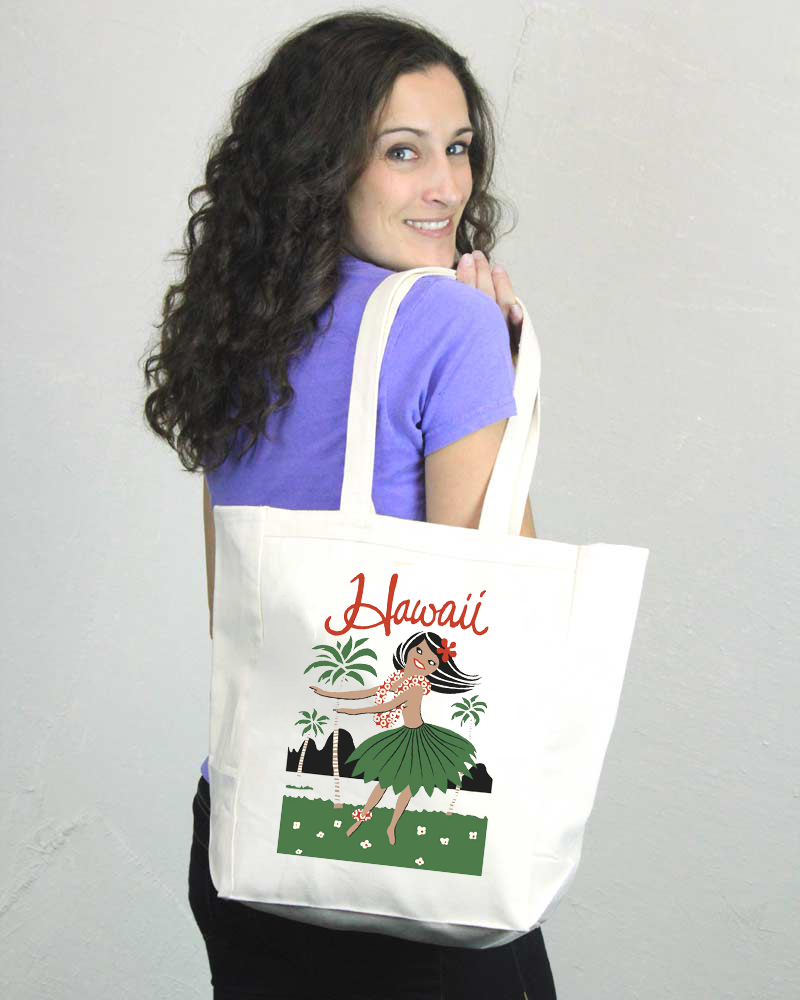
It is believed that the traditional hula, Kahiko, has been part of the Hawaiian culture since ancient times. Today it is much more common to see the contemporary hula known as ‘Auana. King David Kalakaua, revered as the Merrie Monarch, had a profound love and appreciation for the hula dance. He said, “Hula is the language of the heart, and, therefore, the heartbeat of the Hawaiian people.” Everything that one does when hula dancing means something. The face, the hands, the feet, and the hips all look or move a certain way, each playing a part of the larger story.


In 1959, the Hawaiian Islands, offering everything from awe-inspiring volcanoes to soothing seas, was officially declared America’s 50th state. Renowned for its soft ivory sands and warm relaxing waters that call to people throughout the world, Hawaii beckoned travelers to come experience and enjoy the unique Hawaiian culture the Islands continue to take pride in today. Surf culture resonates throughout Hawaii. Hawaii’s primary inhabitants, the Polynesians, began the practice of surfing, and the legendary Hawaiian surf culture was born. Surfing was interwoven in all aspects of Hawaiian’s lives from the connection to the sea to the community and love it provided among people. Hawaiians celebrated the ocean during luau with hula dances dedicated to giving thanks to the gifts the sea bestows. During the 1900s, Duke Kahanamoku became a symbol for Hawaii’s surf culture, as he reflected the Spirit of Aloha in his noble and respectful yet kind and welcoming actions. Beginning in the mid-1900s, Hawaiian beaches became the focal point of the Islands. Surf clubs like Waikiki Surf Club began offering lessons to tourists, beach bunnies tanned on the shores, and keiki splashed in the shoreline. To this day, Hawaii’s beaches tell the story of the Hawaiian culture, while continuing to keep the traditional Hawaiian values of community and the Spirit of Aloha alive today.
11 OZ. CERAMIC MUGS
- Microwave Safe
- Colorfast wrap print artwork
- Dish Washer Safe


Today the sport of surfing and its cultural impact is felt all around the globe. Surfing was an integral part of life among native Hawaiians when Europeans began to arrive in the late 18th century. After being labeled as a taboo by Missionaries, surfing had a major resurgence in the mid 1900s. The history of surfing can be seen through the evolution of Hawaiian surfboards from the ancient paipo to the modern shortboard. Lifesize replicas of many of these boards are on display in the Malibu Shirts surf museum, including those shaped by the legendary Dale Velzy.
11 OZ. CERAMIC MUGS
- Microwave Safe
- Colorfast wrap print artwork
- Dish Washer Safe


Today the sport of surfing and its cultural impact is felt all around the globe. Surfing was an integral part of life among native Hawaiians when Europeans began to arrive in the late 18th century. After being labeled as a taboo by Missionaries, surfing had a major resurgence in the mid 1900s. The history of surfing can be seen through the evolution of Hawaiian surfboards from the ancient paipo to the modern shortboard. Lifesize replicas of many of these boards are on display in the Malibu Shirts surf museum, including those shaped by the legendary Dale Velzy.

Known as "The Hawk", Dale is a surfer, a celebrity, a hell raising rebel, a revolutionary retailer, a hall of fame surfer, a surf film financier, a lifeguard, and most of all, a shaper. A master shaper in his own right, Joe Quigg said, "You couldn't even sell a board in the sixties unless it looked like a Velzy board." Dale opened Velzy Surfboards (the world's first surf shop) in Manhattan Beach in 1949, and within years had shops all along Southern California's coast, and in Hawaii. Dale was so influential that a stretch of Hawaii's famous North Shore - now known as Velzyland - was named in his honor. In his 50 plus years of building boards for the best surfers the sport has ever known, Dale designed dozens of surfboards, each revolutionizing surfing in its own way.


Surfer magazine called Makaha one of the “25 Best Waves in the World.” Hawaiian for “fierce,” Makaha is regarded in many circles as the home of big wave surfing, due in large part to the 30 foot wave that Greg “Da Bull” Noll caught in 1969. Until the advent of tow-in surfing, it was the largest wave ever ridden.
From 1954 to 1971, Makaha was home to the biggest surf competition of the day, the Makaha International Surfing Championships. Honolulu surfer and restaurant supplier John Lind created the winter contest, sponsored by the Waianae Lions Club and Waikiki Surf Club, to attract the world’s best surfers.


Believe it or not, Hawaii does, indeed, have an interstate highway. Now, you ask, how can an island have an interstate highway? Well, U.S. law states that federal highway funds can be used as long as the proposed highway connects military bases. Oahu’s Honolulu Highway, known to locals as “H1,” connects Pearl Harbor with Diamond Head, which used to be home to Fort Ruger. The first portions of the H1 opened in 1953, and over a half century later, H1 still enables locals and visitors alike to explore the beautiful island of Oahu. There are also interstates H2 and H3, which completed in 1997, has arguably some of the most beautiful views of any US highway.
11 OZ. CERAMIC MUGS
- Microwave Safe
- Colorfast wrap print artwork
- Dish Washer Safe

One of a handful of "Surf Clubs" advertised in magazines during the surfing boom of the 1960's. By filling out the membership request and mailing it in with the membership fee, a club member would usually receive an official membership card as well as some identifying club branded gift such as a t-shirt or sticker. While obviously a gimmick, the opportunity to be part of a surf club for kids across the country was a chance to be part of a cultural phenomenon as surfing was exploding into the social conscious of both consumers and marketers.
SELF ADHESIVE CUSTOM CUT VINYL STICKER
- Sheet size: 4" X 5.25"
- Peel and stick
- Water resistant
- For indoor and outdoor use
Brands From Now And Then


- Choosing a selection results in a full page refresh.
- Opens in a new window.